DMR vs Analogue Radios: What's the Difference?
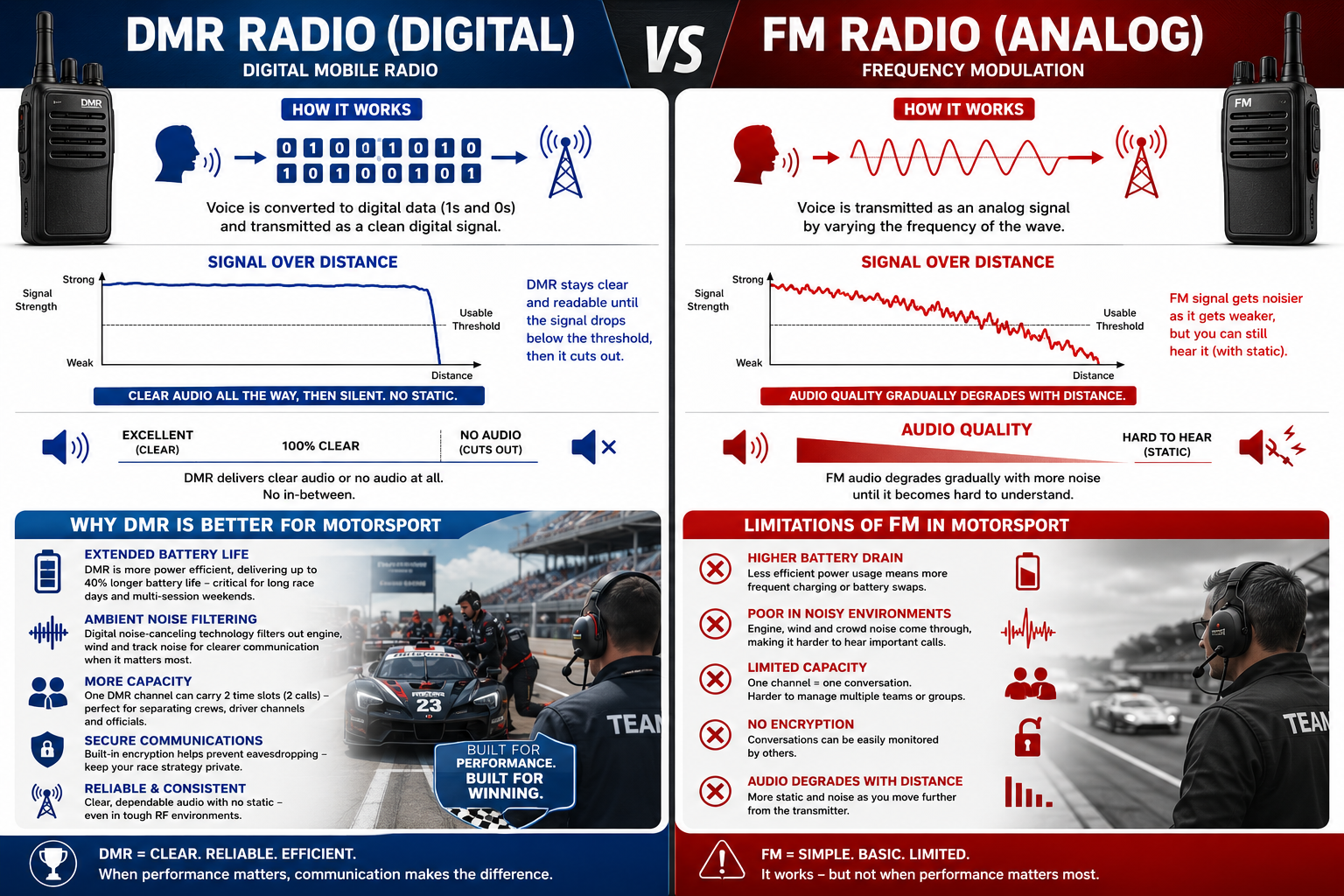
If you've ever used a 2-way radio, you've probably experienced FM (frequency modulation) radio. FM is the old way of sending voice over radio waves, and it's been around for decades. When you talk into an FM radio, your voice gets turned into a wave pattern that travels through the air to other radios on the same frequency. It works pretty well, but there's a catch: only one person can talk at a time on the same channel, and the signal can get fuzzy or drop out if you're far away or in a crowded area.
DMR (Digital Mobile Radio) is the newer, smarter way to send radio signals. Instead of turning your voice into a wave pattern like FM does, DMR converts your voice into digital data—basically 1s and 0s, like how computers work. This might sound complicated, but it has some awesome benefits. Two people can talk on the same frequency at the same time without stepping on each other. The sound is crystal clear and doesn't get fuzzy. You can send text messages and data, and the signal works better over longer distances. Plus, DMR radios are more secure because they can encrypt conversations, making it harder for people to listen in.
The bottom line? FM radios are simple, and they work, but DMR is like upgrading from a bicycle to a motorcycle. DMR is faster, more reliable, lets more people communicate at once, and offers features that FM just can't match. For businesses and emergency services that need their radios to work perfectly every single time, DMR is worth the switch.